Security is one of the biggest concerns for commercial property owners and facility managers. Whether you manage a hospital, retail store, warehouse, school, office building, or government facility, you need to know who can enter your building and when. Traditional locks and keys still have their place, but modern businesses often need a smarter way to control access.
If you’ve ever wondered what an access control system is, you’re not alone. These systems have become a standard solution for businesses that want better security, improved accountability, and easier management of entry points.
In this guide, we’ll explain what an access control system is, how these systems work, the different types available, their benefits, and how to choose the best solution for your commercial property.
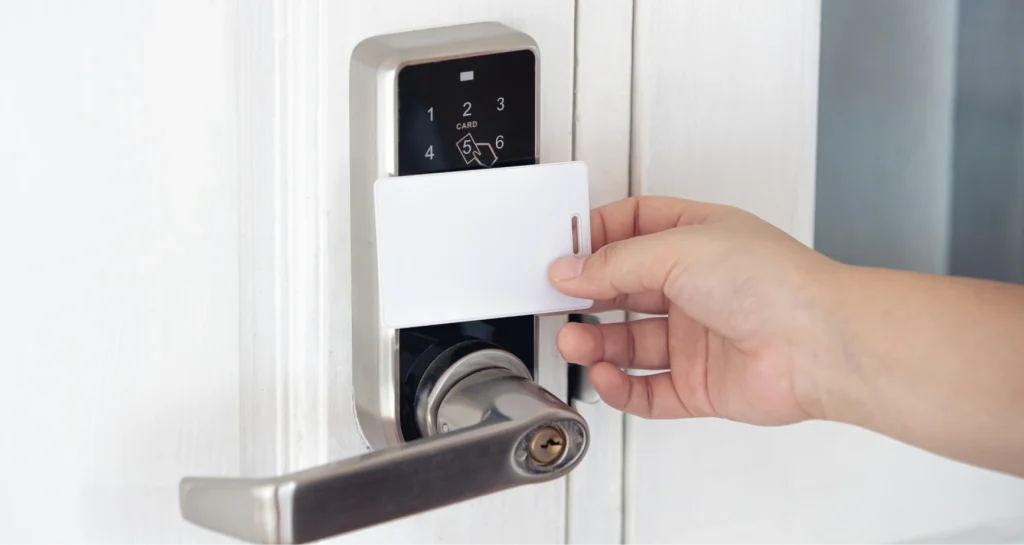
What Is an Access Control System?
The simplest answer to what is an access control system is that it is a security system that controls who is allowed to enter specific areas of a building.
Instead of relying solely on traditional keys, an access control system uses electronic credentials and intelligent hardware to grant or deny access.
These credentials may include:
- Key fobs
- Access cards
- Mobile phone credentials
- PIN codes
- Biometric identification such as fingerprints or facial recognition
Every attempt to enter can be recorded, making it much easier to monitor activity throughout your facility.
Modern commercial door access control systems help businesses protect employees, customers, equipment, inventory, and sensitive information while simplifying day-to-day building management.
What Is a Door Access Control System?
Many people also ask, what is a door access control system?
A door access control system focuses specifically on securing entrances and exits. Rather than replacing your entire security system, it integrates directly with your commercial doors.
These systems can control:
- Main entrances
- Employee-only areas
- Data rooms
- Warehouses
- Pharmacy storage
- Medical records rooms
- Server rooms
- Loading docks
- Executive offices
Because every door can have its own permissions, businesses can decide exactly who has access to each area.
For example:
- Employees may enter the main office.
- Managers may access secure storage.
- Maintenance staff may enter utility rooms.
- Visitors may only enter designated areas.
This level of control makes commercial facilities much more secure.
How Does Access Control System Work?
Understanding how access control systems work helps explain why these systems are so reliable.
Although systems vary by manufacturer, most follow the same basic process.
Step 1. The User Presents Credentials
A user presents a credential to a reader.
This could be:
- Key card
- Key fob
- Smartphone
- PIN code
- Fingerprint
Step 2. The Reader Sends Information
The reader sends the credential information to the control panel or management software.
Step 3. The System Verifies Permissions
The software checks whether the credential is authorized.
It also verifies:
- Time restrictions
- Door permissions
- User status
- Security settings
Step 4. The Door Unlocks
If approved, the system releases the electric strike or magnetic lock.
The user enters.
If access is denied, the door remains locked.
Step 5. Activity Is Recorded
Nearly every modern system creates an electronic log showing:
- Date
- Time
- Door location
- User
- Successful entry
- Denied access
These records are valuable for audits, investigations, and security reporting.
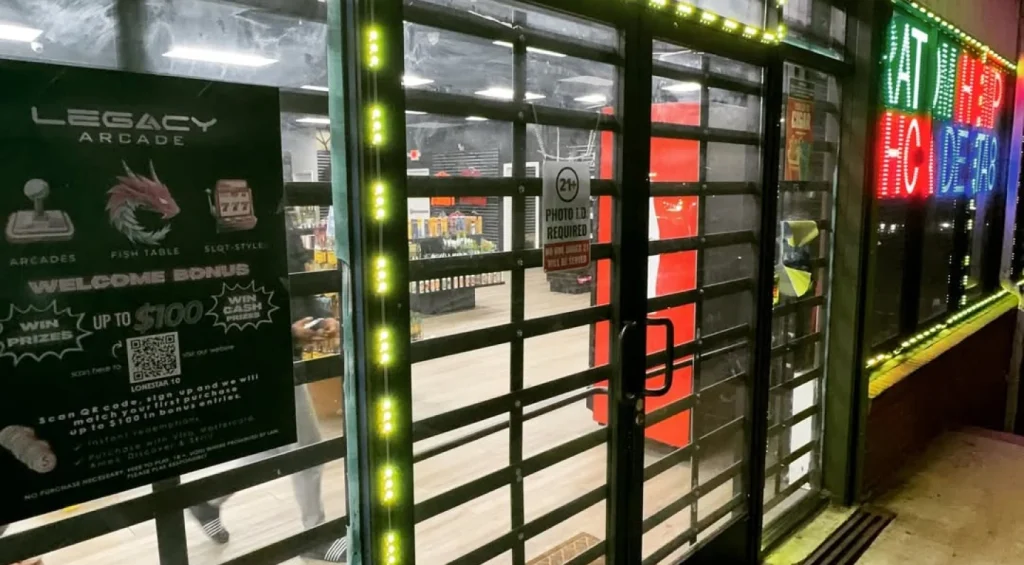
How Door Access Control System Works With Commercial Doors
Many business owners ask how the door access control system works with existing entry systems.
The good news is that many commercial doors can be upgraded without replacing the entire opening.
A typical installation includes:
- Electronic locks
- Card readers
- Door controllers
- Request-to-exit devices
- Motion sensors
- Electric strikes
- Maglocks
- Power supplies
- Management software
When properly installed, these components work together to provide secure, controlled access.
Many facilities also combine access control with automatic door systems, making entrances both secure and ADA compliant.
Businesses considering this upgrade often benefit from Automatic Door Repair & Installation alongside access control improvements.
Main Components of an Access Control System
Every access control system contains several essential parts.
Credentials
Credentials identify authorized users.
Examples include:
- Key cards
- Key fobs
- Mobile apps
- PIN codes
- Biometrics
Card Readers
Readers verify the user’s credentials.
They are installed near secured doors.
Door Locks
Electronic locks secure the entrance until authorization is granted.
Common options include:
- Electric strikes
- Magnetic locks
- Electrified lever hardware
Control Panel
The controller serves as the brain of the system.
It processes all access requests and communicates with every connected device.
Software
Management software allows administrators to:
- Add users
- Remove users
- Schedule access
- Monitor activity
- Generate reports
Cloud-based systems allow remote management from virtually anywhere.
Types of Access Control System
There are several types of access control system, each offering different levels of security and flexibility.
Discretionary Access Control (DAC)
With DAC, the owner determines who has access.
This approach is simple but works best for smaller businesses.
Mandatory Access Control (MAC)
MAC uses centralized security policies.
Only administrators can assign permissions.
Government buildings and military facilities commonly use this approach.
Role-Based Access Control (RBAC)
RBAC grants permissions based on an employee’s role.
Examples include:
- Manager
- Receptionist
- Maintenance
- IT staff
- Warehouse supervisor
This is one of the most popular systems for commercial facilities because it is easy to manage.
Attribute-Based Access Control (ABAC)
ABAC uses multiple factors before granting access.
These may include:
- Employee role
- Time of day
- Department
- Building location
- Security clearance
Large organizations often choose ABAC because it provides exceptional flexibility.
Access Control System Benefits
There are many access control system benefits beyond simply locking doors.
Better Security
Unauthorized visitors cannot enter restricted areas without approved credentials.
This greatly reduces security risks.
Improved Employee Safety
Controlled entry helps protect employees in workplaces with sensitive equipment or restricted areas.
Healthcare facilities, schools, and industrial buildings especially benefit from this added protection.
Easier Credential Management
Lost keys can create expensive security problems.
Electronic credentials can often be disabled immediately without changing locks.
Complete Activity Tracking
Managers can review detailed access reports showing:
- Who entered
- Which door
- What time
- Whether access was granted
This improves accountability throughout the organization.
Reduced Key Management
Businesses no longer need to issue large numbers of physical keys.
This simplifies employee onboarding and offboarding.
Flexible Access Scheduling
Access can be limited based on:
- Business hours
- Employee shifts
- Temporary contractors
- Cleaning crews
- Vendors
Supports Compliance
Many industries have strict security requirements.
Commercial access systems can help facilities meet internal policies and regulatory expectations while supporting secure building operations.
Industries That Benefit Most From Access Control
Almost every commercial property can benefit from access control technology.
Common applications include:
- Hospitals
- Medical offices
- Retail stores
- Pharmacies
- Warehouses
- Manufacturing plants
- Office buildings
- Schools
- Universities
- Government facilities
- Multi-tenant commercial buildings
These industries often require controlled access to protect people, equipment, inventory, or confidential information.
How to Choose an Access Control System
If you’re wondering how to choose an access control system, start by evaluating your facility’s needs.
Building Size
Small offices may only need one or two controlled doors.
Large campuses often require hundreds of controlled access points.
Choose a system that can grow with your business.
Security Requirements
Consider what you need to protect.
Ask questions such as:
- Are sensitive records stored on-site?
- Do certain departments require restricted access?
- Are valuable products or equipment present?
Higher-security facilities often need additional authentication methods.
Number of Users
Think about:
- Employees
- Contractors
- Vendors
- Temporary staff
- Visitors
The system should easily manage everyone who requires access.
Integration
Some systems integrate with:
- Security cameras
- Alarm systems
- Automatic doors
- Visitor management software
Integration improves overall building security while making administration easier.
Businesses planning integrated entry systems may also consider Entry Door Systems for upgraded commercial entrances.
Future Growth
Avoid purchasing a system that only meets today’s needs.
Scalable systems make it easier to add:
- Doors
- Buildings
- Employees
- Locations
This is especially important for growing businesses and multi-location organizations.
Ease of Management
The software should be simple to use.
Facility managers should be able to:
- Add users
- Remove credentials
- Review reports
- Update schedules
without complicated programming.
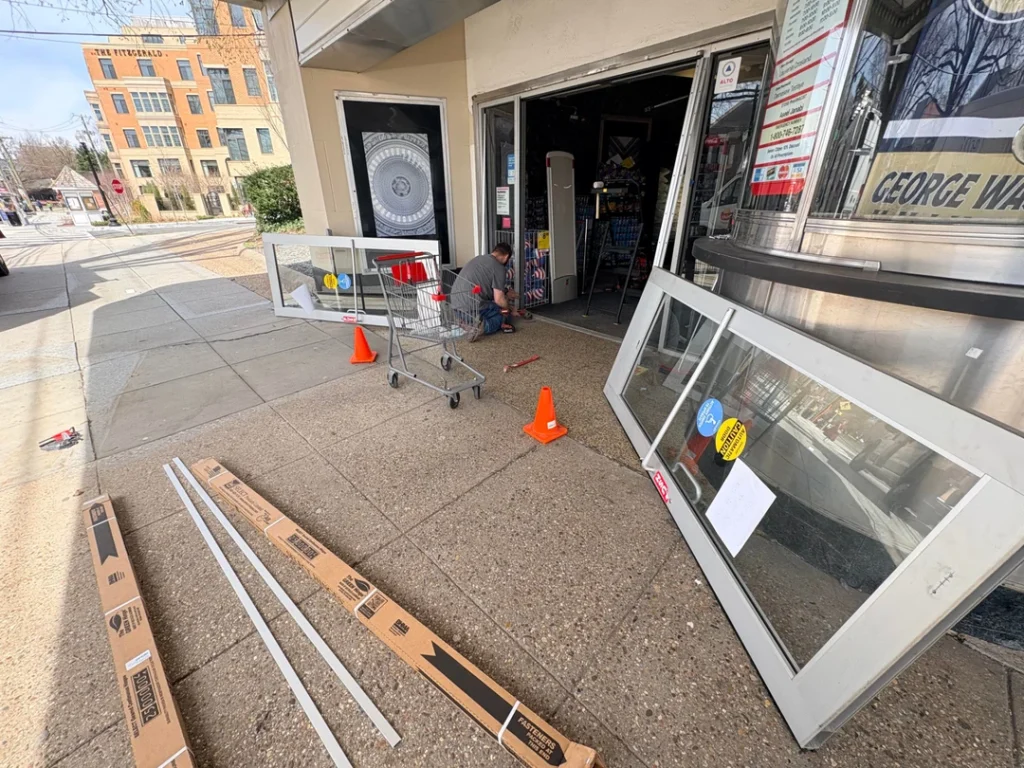
Why Professional Installation Matters
Access control systems involve much more than mounting a card reader beside a door.
Proper installation includes:
- Door hardware compatibility
- Electrical connections
- Safety requirements
- Code compliance
- Sensor adjustments
- System programming
- User testing
Improper installation can lead to security gaps, operational problems, or unnecessary downtime.
Working with trained professionals helps ensure every component operates as intended from day one.
Maintaining Your Access Control System
Like any commercial building system, access control equipment performs best with regular maintenance.
Routine service may include:
- Reader testing
- Lock inspections
- Software updates
- Battery replacement
- Door alignment
- Sensor verification
- Credential testing
Preventive maintenance helps reduce unexpected failures while extending the life of the system.
Businesses with multiple facilities often benefit from scheduled Preventive Maintenance Programs to keep access control and door hardware operating reliably year-round.
Common Signs Your Business Needs an Access Control Upgrade
If your facility still depends entirely on traditional keys, it may be time to consider modern access control.
Some common warning signs include:
- Lost or stolen keys
- Frequent employee turnover
- Limited visibility into who enters the building
- Growing security concerns
- Expansion into multiple locations
- Outdated locking hardware
- Difficulty managing access permissions
Modern systems offer greater flexibility and improved control over commercial properties of every size.
Conclusion
Understanding what an access control system is the first step toward creating a safer and more efficient commercial facility. These systems provide far more than electronic locks. They help businesses manage access, improve accountability, strengthen security, simplify credential management, and support daily operations. Whether you oversee a small office or multiple commercial locations, choosing the right system depends on your building’s size, security requirements, future growth, and operational goals. By investing in the right solution and keeping it properly maintained, you can create a secure environment that supports employees, visitors, and your business for years to come.
At GHK Door Solutions, we install and service commercial access control systems for businesses throughout Troutman, NC, and surrounding areas. With nearly 20 years of hands-on experience, AAADM-certified technicians, and a background in high-security environments like hospitals and medical facilities, we focus on dependable workmanship, clear communication, and code-conscious installations. Whether you need a new system, upgrades to existing equipment, or ongoing support, we also provide Commercial Door Repair Services, Fire Door Inspections & Code Compliance, and Automatic Door Repair & Installation to help keep your facility secure, operational, and compliant. Call (704) 991-7514 to book a service call or request a free estimate.